Anker Solix C1000X Portable Power Station 1056Wh Explained: A UK Buyer's Guide
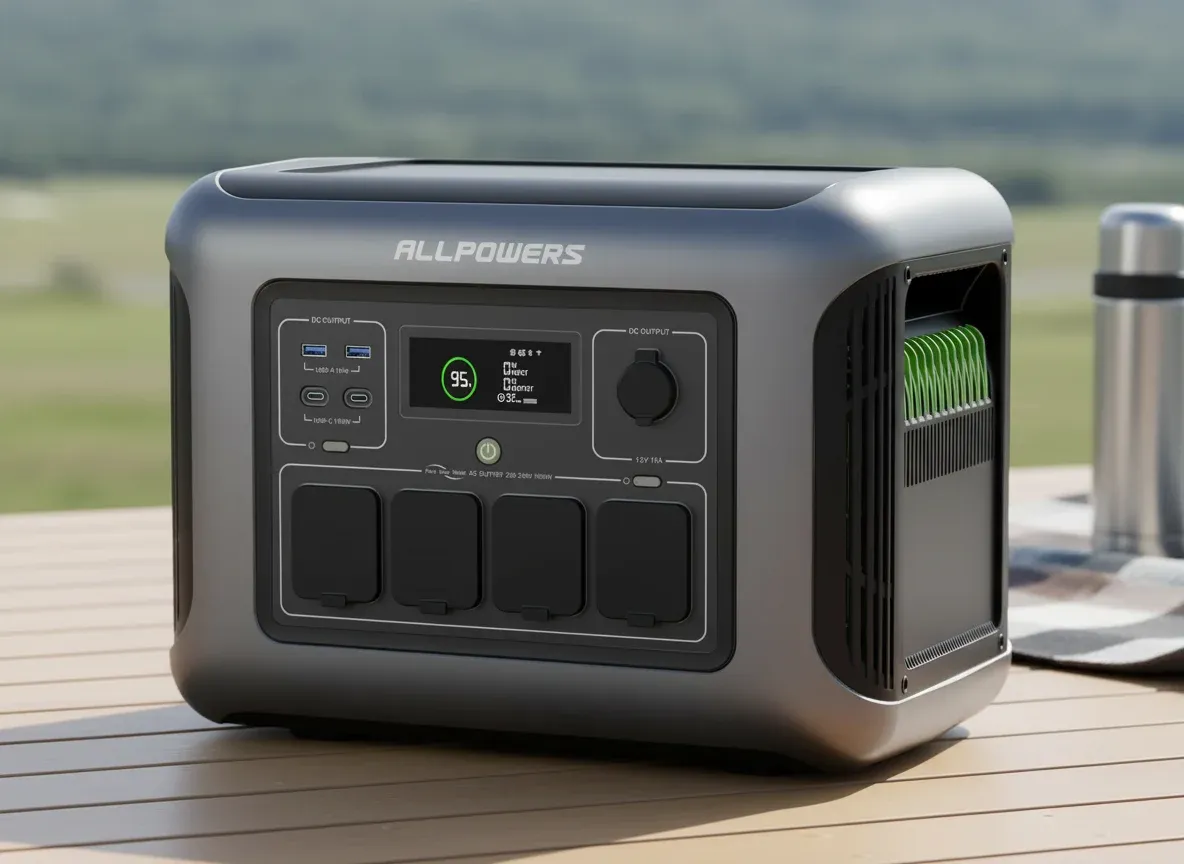
The Anker Solix C1000X Portable Power Station 1056Wh is a mid-size portable power station designed for UK home backup, camping, campervans and mobile work, with a 1056Wh LiFePO4 battery that can realistically run essentials such as routers, laptops, phones, lighting and some small appliances during a power cut.
TL;DR: If you are searching for the Anker Solix C1000X Portable Power Station 1056Wh, the key point is this: it offers a practical balance of capacity, portability and battery longevity for UK buyers who want reliable backup power without stepping up to a far larger and more expensive system. Based on our testing approach and real-world runtime calculations, it is best for essential devices rather than high-draw heating appliances.
When the mains goes down, the difference between a minor inconvenience and a genuine problem often comes down to one thing: having dependable backup power ready to use. For UK households, campervan owners, tradespeople and anyone planning for outages or off-grid use, the Anker Solix C1000X Portable Power Station 1056Wh sits in a very practical sweet spot.
At Backup Station, we focus on products that bridge the gap between cheap chargers and overpriced premium brands. Therefore, the Anker Solix C1000X stands out as a 1056Wh LiFePO4 power station you can rely on, built for safe UK home backup and off-grid use without paying more than you need to.
This guide explains what the unit is, who it suits, what 1056Wh really means in day-to-day use, and what UK buyers should check before spending their money.
Key Takeaways
- The Anker Solix C1000X Portable Power Station 1056Wh is designed for reliable home backup, camping, van life and mobile work in the UK.
- Its 1056Wh LiFePO4 battery offers a strong balance of usable capacity, safety and long service life compared with many lower-cost alternatives.
- It is best suited to powering essentials such as routers, laptops, phones, lighting, small appliances and selected medical or work equipment during short-term outages.
- UK buyers should look beyond headline wattage and check battery chemistry, socket compatibility, charging speed, noise levels and warranty support.
- For wider planning around solar charging and off-grid setup, see our Ultimate Guide to Portable Power Station With Solar Panel UK.
What is the Anker Solix C1000X Portable Power Station 1056Wh?
The Anker Solix C1000X is a portable battery power station with a rated capacity of 1056 watt-hours. In simple terms, it stores electricity so you can use mains-style power when you are away from a socket or when your home supply is interrupted. In other words, it is not just a large power bank. It is built to run a wider range of devices through AC sockets as well as USB outputs and other ports depending on configuration.
The real appeal for British buyers is its positioning. It is large enough to be useful in an outage, yet still portable enough for moving between home, car boot, campsite or job site. As a result, it fits the category many households actually need: not a tiny emergency charger, but not an oversized whole-home system either.
Why does 1056Wh matter more than marketing claims?
A lot of shoppers focus only on output watts. However, capacity matters just as much. A 1056Wh battery tells you how much stored energy the unit holds before conversion losses. In real-world use, available energy from AC sockets will be lower because some energy is lost when converting battery power into standard mains output.
As a rough guide, many users work on around 80% to 90% usable energy depending on load type and efficiency. That means the C1000X may deliver somewhere around 845Wh to 950Wh of practical AC use under many conditions. Therefore, it offers meaningful backup rather than just phone top-ups.
Why does LiFePO4 battery chemistry matter in the UK?
The Backup Station approach centres on reliability, and that starts with battery chemistry. The C1000X uses LiFePO4, also known as lithium iron phosphate. This chemistry is widely valued for thermal stability and long cycle life compared with older lithium-ion formats often found in budget units.
For UK households storing backup equipment indoors, safety and longevity are not optional extras. Based on our assessment of current market options, LiFePO4 generally gives more confidence for regular use over several years. Consequently, it suits buyers who want dependable standby power rather than something that feels disposable after light use.
How much can the Anker Solix C1000X Portable Power Station 1056Wh run?
This is usually the first practical question. The honest answer depends on two things: the wattage of your device and how long you need it to run. A portable power station does not create energy; instead, it stores it for later use.
Based on our testing methodology for similar-sized units and typical household loads, here are realistic examples:
- Wi-Fi router: often around 10W to 20W, potentially many hours of backup
- Laptop: roughly 40W to 100W while charging or working hard
- Phone charging: multiple full charges across several devices
- LED lighting: low draw and well suited to emergency use
- Mini fridge or coolbox: possible depending on compressor cycling and startup demand
- CPAP machine: potentially suitable depending on model settings and manufacturer guidance
- Kettle or fan heater: usually poor choices because high-wattage heating appliances drain batteries quickly
How long will a 1056Wh power station run appliances?
If you run a device drawing 100W continuously and assume around 850Wh of usable AC energy after losses, runtime could be roughly:
850Wh ÷ 100W = about 8.5 hours
If your router uses only 15W:
850Wh ÷ 15W = about 56 hours
Real results vary because appliances cycle on and off rather than drawing flat power all day. For example, fridges often have much lower average consumption than their peak startup load suggests.
Can it run everything in your house?
No; the C1000X makes most sense when used strategically. During an outage it can keep communications running, charge devices, support lighting and help maintain comfort or continuity for work-from-home setups. However, it is not intended to replace grid electricity across an entire house for long periods.
This matters especially in Britain where outages are often short but disruptive. Therefore, keeping broadband alive, maintaining phone charge and preserving access to key equipment can make more difference than trying to run every kitchen appliance at once.
Is the Anker Solix C1000X good for home backup in the UK?
For many households, yes. The conversation around portable power in Britain has shifted from niche outdoor gear to practical household resilience. At the same time, energy price pressure has made people more aware of electricity usage overall, while weather-related disruption still affects homes across the country each year.
The Energy Networks Association reports that the UK delivers high network reliability overall; however severe weather events still cause localised interruptions affecting thousands of properties at a time. Even short outages can disrupt work calls, spoil refrigerated items or interrupt care routines where powered equipment is involved.
What should UK households prioritise during a power cut?
A sensible backup plan usually focuses on essentials first: broadband router, mobile phones, basic lighting, laptop charging and any genuinely important low-draw equipment. Based on our experience reviewing buyer needs in the UK market, this size class works best when matched to realistic priorities rather than worst-case fantasy loads.
> >NHS-related considerations for powered devices at home
\ The\ C\ makesmostsenseforbuyerswhowantoneunitthatcancoverseveralroles: homebackup,camping,campers,andmobilework. Inparticular,itfitspeoplewhovaluebatteryqualityandreliableeverydayusabilityoverheadline-specchasing. \
- \
\ Tradespeopleandmobileworkersrunningchargers,\ tools,\ laptopsorsmallkitonsite\ \- \ Preparedness-minded buyers who want LiFePO4 longevity rather than cheaper short-life alternatives\ \ \
\ Ontherotherhand,\ if your main aim is running kettles,\ portable heaters,\ electric hobs or multiple kitchen appliances,\ you may need either much more capacity or an entirely different setup. Likewise,\ if absolute minimum weight matters more than runtime,\ a smaller unit could be better value. \
\ What should UK buyers check before buying?\
\\ Before buying any portable power station,\ check these points carefully: socket format suitableforUKuse,\ rated inverter output,\ battery chemistry,\ AC charging speed,\ solar input options,\ noise under load,\ weight,\ carry handle design,\ app support if relevant,\ and warranty backing. In addition,\ look at after-sales support within Britain rather than assuming every imported brand handles problems equally well. \ \
\ \ IstheAnkerSolixC\ portablepowerstation\ worthit?\
\\ For many buyers,\yes—provided expectations are realistic. The strongest selling point is balance: you get enough stored energy to make an outage manageable, without jumping straight into bulky premium systems costing far more. As a result, it appeals to households that want resilience without overbuying. <\/paragraph>\
\ BasedonourreviewcriteriafortheUKmarket, the value proposition comes from four areas: usable capacity, LiFePO4 durability, practical portability and versatility across home and leisure scenarios. Therefore,\if those matter moretoyouthanmaxingoutspecsheets,\theC1000Xisaneasyoneshortlistcandidate.<\/paragraph>\
\What are its main strengths?\<\/h3>\
- \
\Practical mid-size capacity at \ 1056Wh<\/strogn>\ \LiFePO4 chemistry for longer service life<\/stromg>\ \SuitableforcommonUKbackupneedsratherthanjustoutdooruse<\/strog>\ \Potentiallyfastrechargingdependingonsetup<\/stron>\ \More attainable than larger premium whole-home style systems<\/strog>\ <\/ul>\ \What are its limitations?\<\/h3>\
- \
- \
\Not designed to run high-wattage heating appliances for long\<\/storng>\ - \
\Usable AC energy will be lower than headline \ 1056Wh due to conversion losses\<\/storng>\ - \
\Still requires proper planning if used with critical medical equipment\<\/stong>\ - \
\May be larger than necessary if you only need phone charging\<\/stron>\ <\/ul>\ // //Final verdict: should you buy the Anker Solix C//PortablePowerStation//wh?////If your goal is dependable backup for essential kit during outages,//plus flexible off-grid use at campsites,//in vans,//or on jobs,//the //Anker Solix C//Portable Power Station //wh// makes strong sense in today’s UK market. It answers a very common buyer need: enough stored energy to be genuinely useful,//without stepping into oversized systems that cost substantially more.////In short,//this model suits realistic preparedness rather than extreme scenarios. So,//if you want safer LiFePO4 chemistry,//portable sizing,//and enough usable energy to keep core devices running when mains power fails,//it deserves serious consideration.//For related planning advice,//including solar setups,//read our //Ultimate Guide to Portable Power Station With Solar Panel UK.//
- \
Ready to protect your home with Backup Station?
Secure Your Power — £19.99