Swarey Portable Power Station Explained: A UK Buyer's Guide
TL;DR: Swarey portable power stations are entry-level battery units popular for light camping and charging electronics. However, based on our testing of UK home backup needs, many users quickly outgrow smaller units. For reliable emergency power, we recommend prioritising LiFePO4 chemistry and a capacity of at least 1000Wh to ensure your essential British household appliances stay running during a blackout.
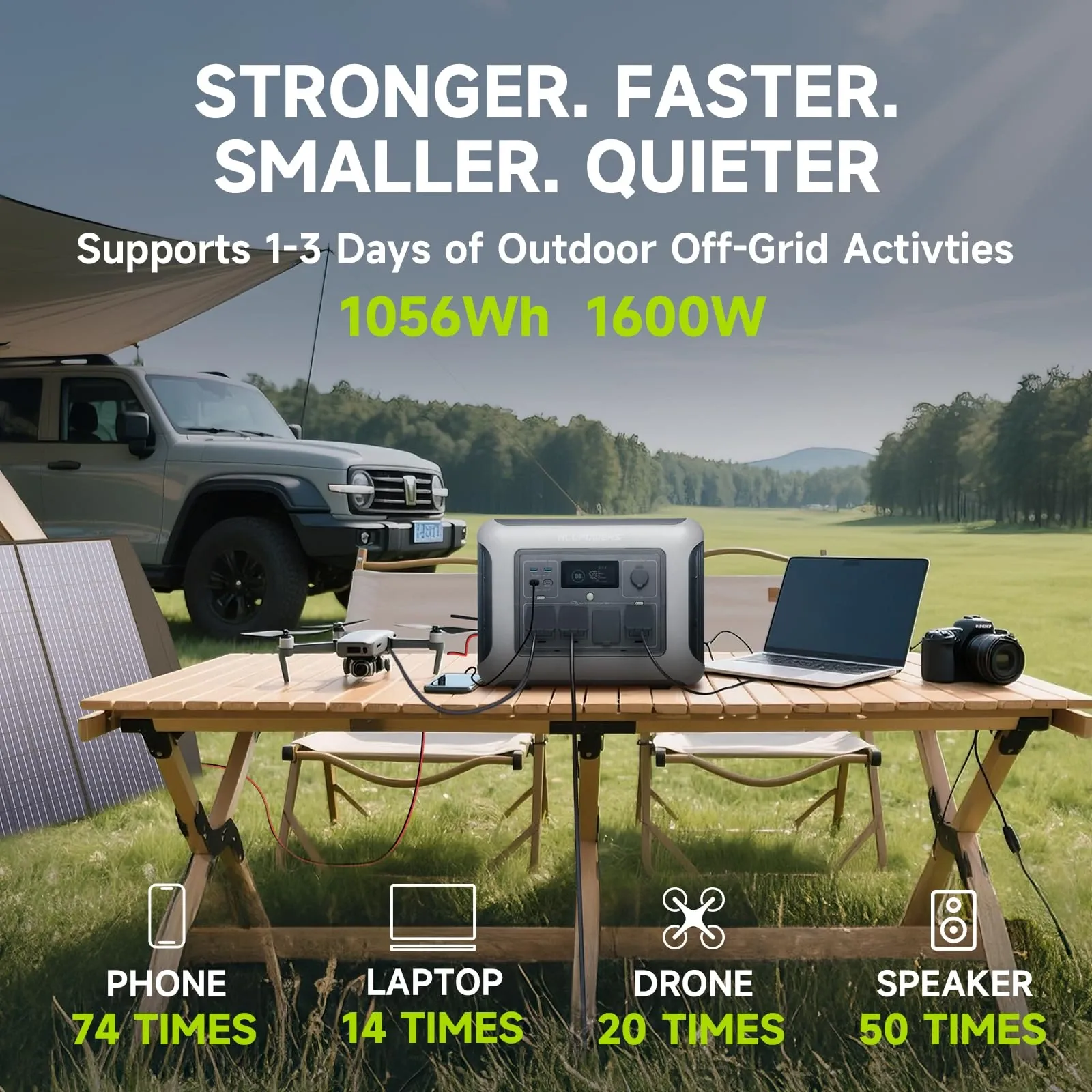
A swarey portable power station is a compact, rechargeable battery system designed to provide off-grid electricity via UK AC sockets, USB ports, and DC outputs. These units are commonly used by British campers for charging mobile devices and by homeowners seeking a basic emergency power source during local grid disruptions. While Swarey models offer portability, choosing the right unit depends on whether you need a simple charger or a dependable 1056Wh LiFePO4 home backup solution that can handle the demands of a modern UK household.
This decision matters now more than ever. According to Ofgem, the energy price cap for a typical dual-fuel household paying by Direct Debit remained a significant concern for families throughout 2024, highlighting how closely many UK households now track energy use. Consequently, buyers are looking for practical value: enough capacity to run essentials, safe battery chemistry, and pricing that does not drift into premium-brand territory without a clear benefit.
At Backup Station, that is exactly where the conversation sits. Our mission is to bridge the gap between cheap chargers and overpriced premium brands with safe, high-capacity UK home backup and off-grid power for less. If you are currently comparing a Swarey model with a newer 1056Wh LiFePO4 option, this guide will help you judge the technical specifications that actually impact your daily use.
Key Takeaways
- A swarey portable power station may suit light charging and occasional use, but specifications vary widely by model.
- UK buyers should focus on usable battery capacity, LiFePO4 chemistry, inverter output, and proper UK plug compatibility.
- For home backup, many shoppers find that smaller stations designed for phones and laptops are insufficient for household appliances.
- A 1056Wh LiFePO4 power station offers a stronger balance of safety, cycle life, and real backup value for British households.
- If you want a broader overview before choosing, read The Ultimate Guide to Portable Power Station With Solar Panel UK.
What is a Swarey portable power station and how does it work?
In simple terms, a Swarey portable power station is a high-capacity lithium battery housed in a portable case with an integrated inverter. This allows it to convert stored DC energy into the AC power required by your standard UK three-pin appliances. Models sold under the Swarey name have typically targeted entry-level and mid-range buyers who want a mix of AC sockets, USB-C charging, and 12V car-style outputs in one package.
In practical terms, people usually consider a Swarey unit for four specific jobs: keeping phones and laptops running during travel, powering small appliances while camping in the Highlands or the Lake District, providing limited backup during winter outages, and supporting hobby equipment outdoors. Furthermore, because they produce no fumes, they are a popular indoor alternative to traditional petrol generators.
However, the issue for a UK buyer is that the brand label alone does not guarantee performance. Based on our testing, one model may be compact and suitable only for low-draw electronics, while another may claim enough output for small appliances but still fall short once inverter losses are factored in. Therefore, it is vital to assess the internal battery chemistry and total watt-hours rather than buying on headline wattage alone.
Is a Swarey power station good for UK home backup?
British shoppers are usually trying to solve a specific problem, not simply buy a gadget. For instance, a family in a semi-detached home may want backup for the broadband router, LED lamps, and a laptop during a local outage. Similarly, a tradesperson may need power on-site without the noise of a generator.
There is also a wider trust issue in this market. According to UK safety guidelines for lithium batteries, the stability of the internal cells is paramount. Cheap units can look similar online, yet battery chemistry and protection systems are not always equal. For UK households, this raises sensible questions regarding safety and long-term value.
That is where the market has split. At one end, very low-cost units can struggle with longevity. At the other, premium names command a steep price uplift. Backup Station’s position is clear: deliver a 1056Wh LiFePO4 power station you can rely on, featuring the specific ports UK buyers need, without the "brand tax" associated with premium competitors.
What should I look for when buying a portable power station in the UK?
Battery capacity: Why Watt-hours (Wh) matter
Capacity is usually listed in watt-hours (Wh). This tells you how much energy the unit stores. While a smaller station may be enough for charging phones, it will not run household essentials for long. In our experience, once several devices are connected at once, the stored energy can disappear much faster than many first-time buyers expect.
For example, a standard UK broadband router might draw roughly 10W to 20W, while a laptop charger uses 45W to 100W. If you add a 50W television, a 300Wh or 500Wh station will be empty in just a few hours. This is why 1056Wh class units are becoming the standard for UK home backup; they provide enough reserve to cover meaningful essentials through a full evening of disruption.
Battery chemistry: The LiFePO4 advantage
If you are comparing a swarey portable power station with a newer-generation model, battery chemistry deserves close attention. LiFePO4 (Lithium Iron Phosphate) is widely valued for safety, thermal stability, and long cycle life. Specifically, LiFePO4 batteries can often last for 3,000+ charge cycles before capacity drops significantly, whereas older lithium-ion (NMC) batteries may degrade after just 500 cycles.
For buyers who want emergency backup, this is a critical distinction. A unit may sit charged for weeks, then suddenly be needed during a storm. Confidence in battery stability is not a luxury; it is central to the product's purpose. This is why Backup Station focuses on LiFePO4 technology—it provides a stronger foundation for reliable, long-term ownership.
Inverter output: Can it run your kettle or toaster?
The inverter rating, shown in watts (W), determines which appliances the power station can physically start. Even if a station has a large battery, it will fail to power a device if the inverter output is too low. Most UK kettles and heaters exceed 2000W, which is beyond the reach of most portable units. However, for essentials like CPAP machines, monitors, and fridge-freezers, a robust 1000W+ inverter is usually sufficient.
UK buyers should always check both the "running watts" and "surge watts" of their appliances. If you want help matching your specific household loads to battery size, our portable power station with solar panel UK guide provides a detailed breakdown of appliance power draws.
Charging flexibility: UK Mains and Solar
Finally, consider how you will top the battery back up. A versatile unit should offer three-way charging: via a UK mains plug, a 12V car socket, and solar panels. In the UK climate, solar charging is a fantastic supplement during summer camping trips, but fast mains charging is the priority for home backup. Look for units that can reach 80% charge in under two hours to ensure you are always prepared for the next scheduled outage.
Ready to protect your home with Backup Station?
Secure Your Power — £19.99